
Cooling off with a clear conscience: Why our lakes are true climate heroes
Nachhaltigkeitshelden Redaktion · 27 August 2026
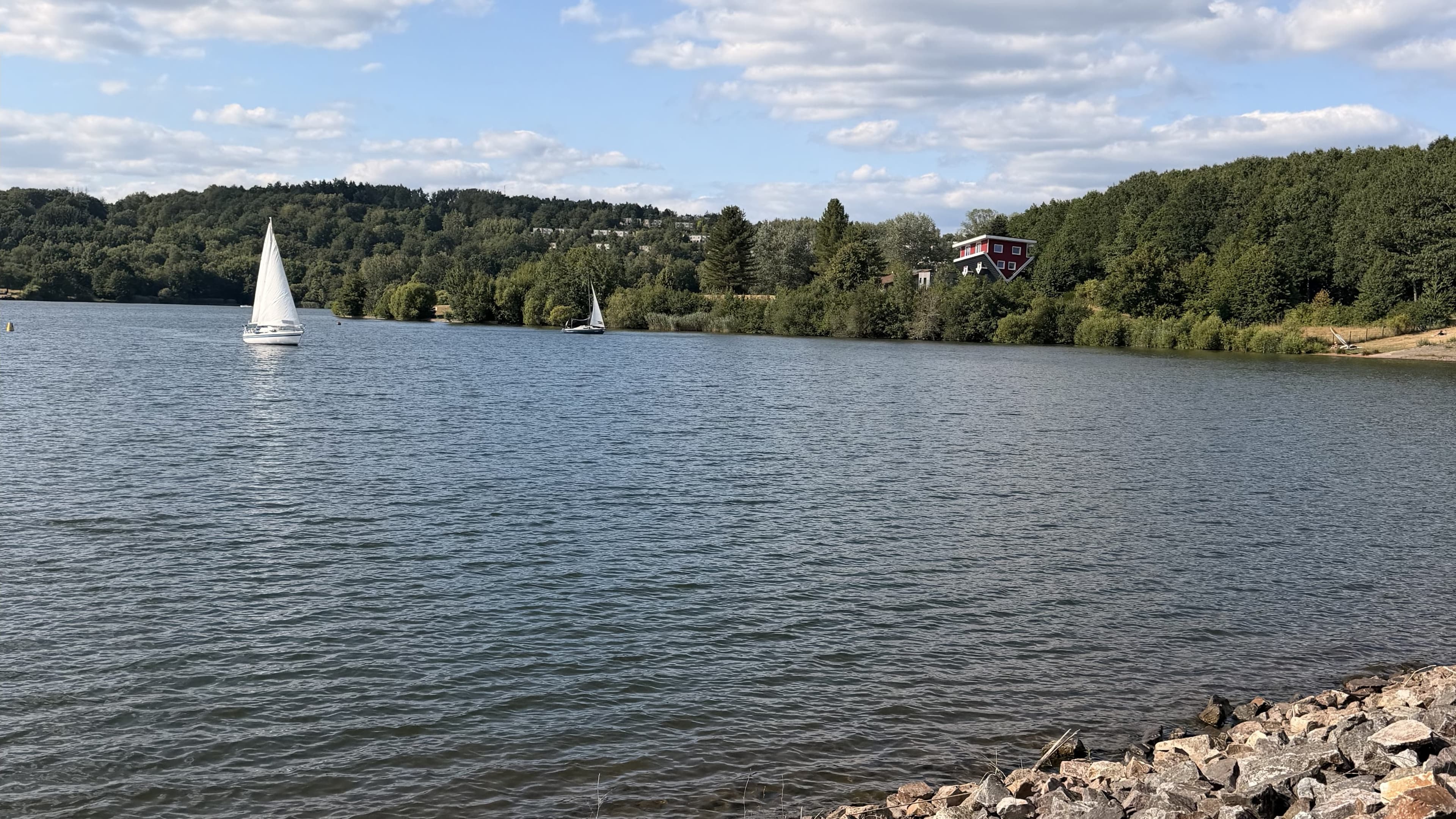
If you take a look at our sustainability heroes map, alongside all the sustainable locations, one thing stands out: the bright blue patches.
Our local lakes are far more than just popular destinations for hot days.
Have you ever wondered what these blue oases on our map actually do in the background for the planet?
Spoiler: Lakes are indispensable heavyweights in climate protection and a central pillar of our ecosystems.
XXL-Climate control systems & lifesavers: What intact bodies of water accomplish
A lake is not a still body of water that just looks beautiful. As highly complex ecosystems, inland waters perform heavy-duty work daily for humans and the environment:
Natural temperature regulators: Large water surfaces can sustainably cool their surroundings. Many city planners have been inspired by precisely this cooling effect and used it for heat management in city centers.
Part of the carbon cycle: Lake sediments can store carbon over millennia. However, studies show that disturbed or even dried-up bodies of water can themselves become sources of greenhouse gases. Protecting intact lakes is therefore active climate protection.
Biodiversity hotspots: From dragonflies to otters, lakes harbor a species diversity that rivals anything on land and deserves equal protection.
Water storage for humans, animals and nature: Especially during dry periods, we recognize how valuable every cubic meter of stored water is for the entire surrounding area.
All of this shows: When lakes suffer, the entire system around them suffers too.
The breaking point: Why our waters need protection
As much as we enjoy cooling off in lakes on hot days, heat waves and intensive use leave clear marks. As water temperatures rise, algal blooms multiply, oxygen content in the water decreases, and low water levels from evaporation and lack of rain put the ecosystem under stress. Bodies of water therefore need careful handling to keep their delicate balance from being disrupted.
Your heroic deeds at the lake: 6 simple tips
Cooling off, recreational fun, and sustainability are by no means mutually exclusive. With just a few habits, your water outing becomes an effective environmental contribution:
Climate-friendly travel
Many bathing lakes can be easily reached by bike or public transport. This not only saves emissions and the hassle of finding a parking spot, but also gives you a fresh breeze for the day.Picnic instead of plastic
Pack your favorite snacks in reusable containers, bring your drinking bottle for refilling, and use a cloth blanket. This little extra preparation saves the shore area from lots of unnecessary packaging waste.Mineral sunscreen
Many common sunscreens contain chemical UV filters that can be harmful to aquatic organisms and plants. Mineral sunscreens protect your skin equally reliably while being gentler on the water ecosystem.Gentle water sports
Whether stand-up paddling, canoeing, pedal boating, or simply swimming in the water, silent movement without engine noise and exhaust fumes protects wildlife and lets you experience nature in absolute peace.Leave no trace: Take nothing but memories
Trash, bottle caps, and cigarette butts should be packed away completely. If you like, you can take a few pieces of litter with you when leaving the shore or throw them in trash cans. Not only nature, but also your fellow visitors will thank you for it!Observe rather than disturb
Reed belts and shoreline zones are sensitive habitats and often important breeding grounds. Keep sufficient distance from protected areas when swimming and paddling, and observe wildlife from a distance.
Your lake, our shared responsibility
Lakes are not infinite resources, but vulnerable partners in the fight against climate change. If we treat them with care, they remain exactly what we value about them: living, cooling power places and a piece of intact nature right on our doorstep.
On our sustainability heroes map, you'll find the blue oases as well as other sustainable locations in your area, and make your next lake visit a small heroic deed for our planet!
The following sources were used in this blog post:
Battin, T.J. et al.: Inland waters as carbon sinks and sources, published in Nature Geoscience
Marcé, R. et al.: CO₂ release from drying water sediments
Leibniz Institute for Freshwater Ecology and Inland Fisheries (IGB): Long-term measurements of water temperature, oxygen content, and algal blooms
Jähnig, S. (IGB): Climate change and aquatic ecosystems
Science Media Center Germany: Heat waves and ecosystems in rivers and lakes
Rose, K. et al.: Declining oxygen levels in freshwater lakes worldwide
NOAA: Effect of UV filters in sunscreen on aquatic life
Image credit & copyright:
The cover image was photographed by Julia Lißmann. All image rights belong to the photographer; reproduction, distribution, or any other use requires explicit permission.